Department of Speech Diagnostics
The Department of Speech Diagnostics is a specialized clinical and research unit dedicated to the comprehensive assessment of speech, language, communication and swallowing disorders across all age groups—from infants to the elderly. The department plays a critical role in the early identification, detailed evaluation, and differential diagnosis of a wide range of speech and language impairments.
This unit offers a full spectrum of diagnostic services tailored to individuals presenting with various communicative challenges, including but not limited to:
Childhood Language Disorders: Including developmental language delay, autism spectrum disorders, etc
Hearing Impairments: Communication issues secondary to partial or profound hearing loss.
Intellectual Disabilities (Mental Retardation): Communication difficulties associated with cognitive delays.
Cerebral Palsy: Neurological motor disorders that affect speech muscle control.
Cleft Lip and Palate: Structural anomalies affecting articulation and resonance.
Misarticulation: Errors in speech sound production, such as lisping or substituting one sound for another.
Fluency disorders (Stuttering, Cluttering)
Vocal Pathologies: Voice disorders caused by conditions such as vocal nodules, polyps, or paralysis.
Neurogenic communication disorders: Often arising from neurological conditions like stroke, traumatic brain injury (aphasia, dysarthria, apraxia), or degenerative diseases (e.g., dementia, Parkinson's disease).
Swallowing disorders (Dysphagia)
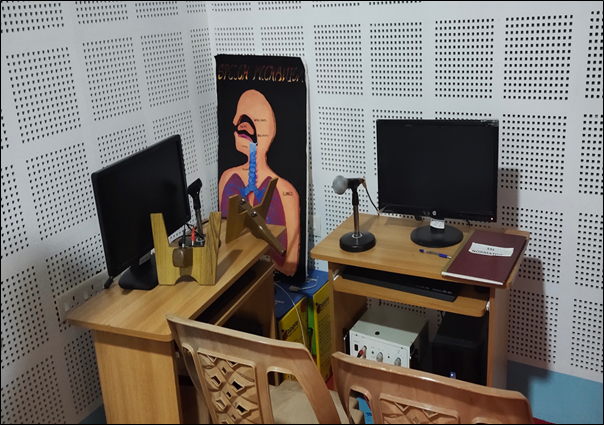
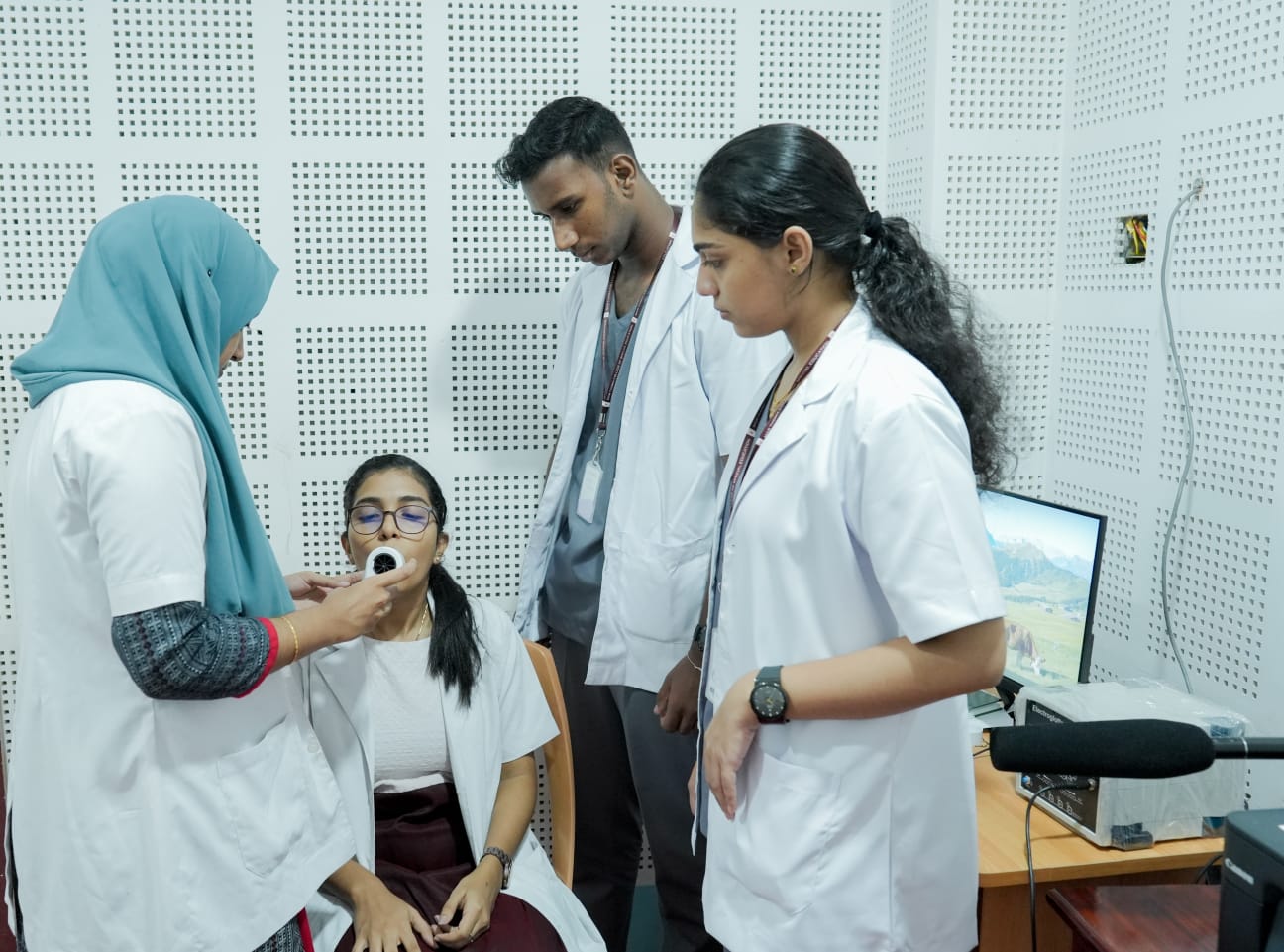
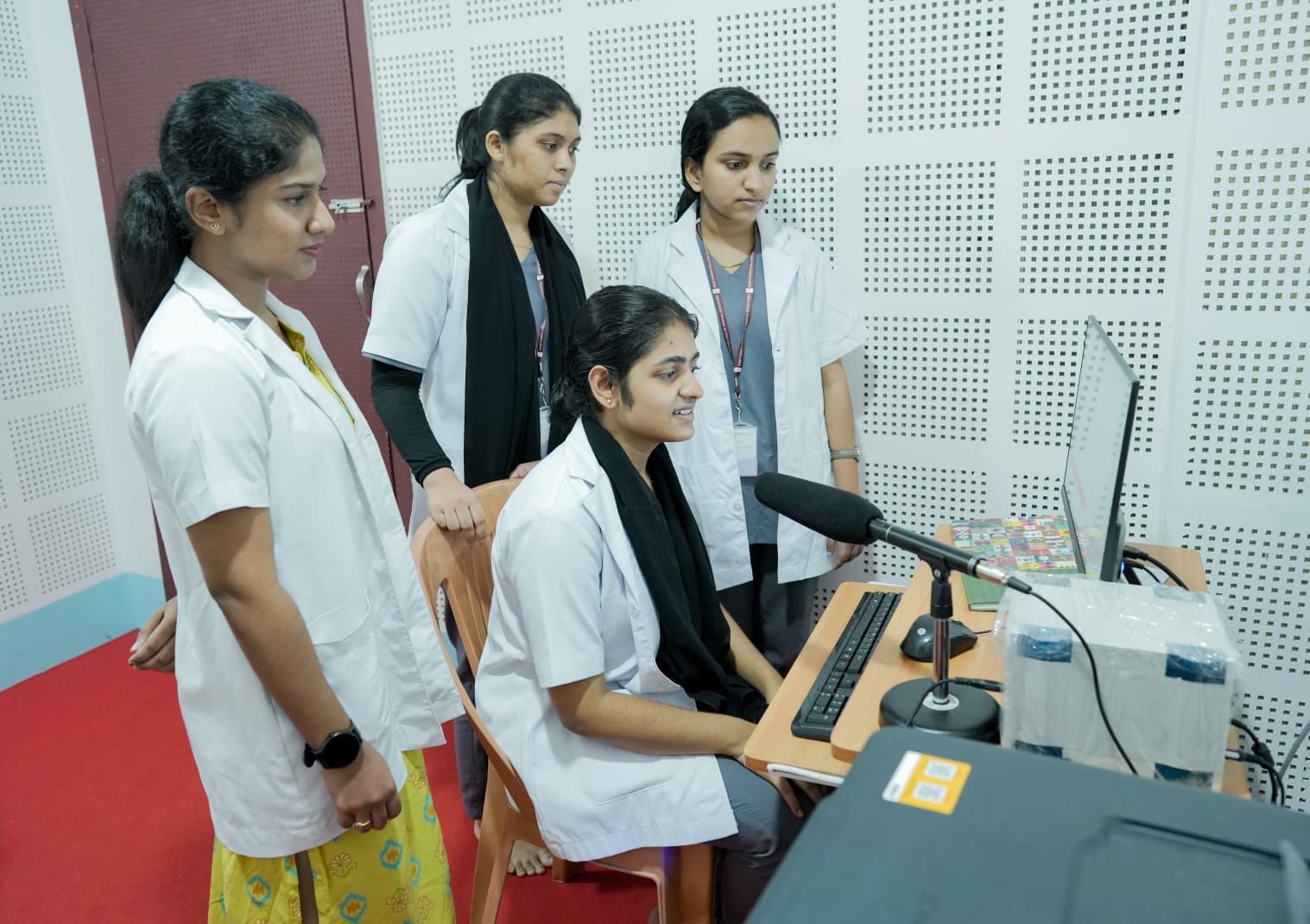
To ensure high-quality and evidence-based diagnostic outcomes, the department is equipped with a Speech Science Laboratory, which enables precise and objective assessments. The evaluation process combines both qualitative and quantitative methodologies, including the use of standardized diagnostic tools and rating scales.
Some of the advanced instruments and software employed include:
- VAGMI: A tool for real-time speech analysis and articulation monitoring.
- Nasometry: Measures nasal resonance in speech, particularly useful in evaluating clients with cleft palate.
- Electroglottography (EGG): Assesses vocal fold function during phonation.
- Dr. Speech: A comprehensive software suite used for speech and voice analysis.
- Praat: A popular phonetic software tool for acoustic analysis of speech.
Through the integration of these advanced technologies with clinical expertise, the Department of Speech Diagnostics ensures accurate identification of speech and language disorders. This foundational diagnostic work enables the formulation of effective, individualized therapy plans, ultimately supporting better communication outcomes and quality of life for clients.
Department of Speech Therapy
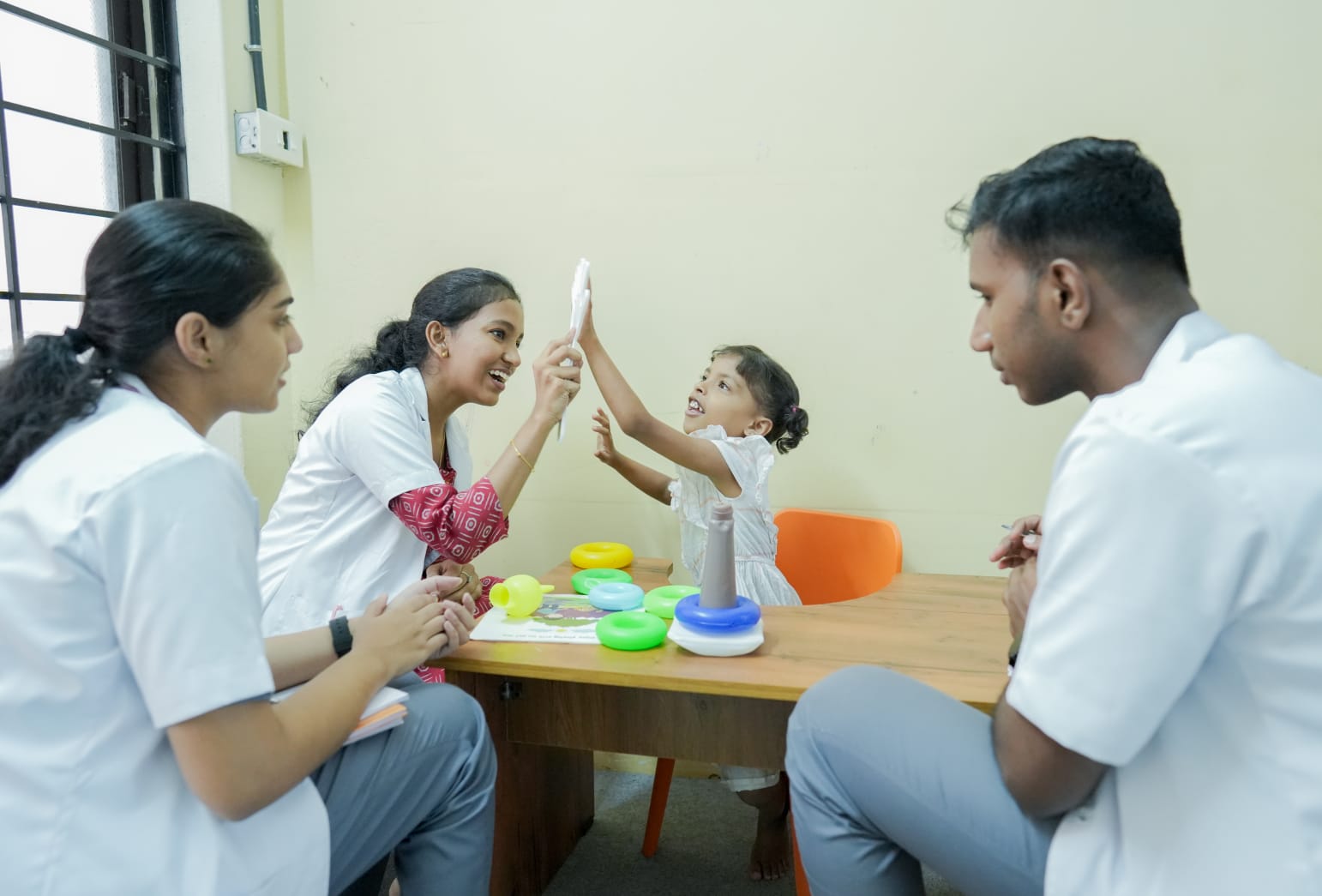
The Department of Speech Therapy is a dedicated clinical unit that provides comprehensive therapeutic management for individuals with a wide range of speech, language, voice, fluency, communication and swallowing disorders. The department plays a pivotal role in the rehabilitation and improvement of communication abilities, helping clients achieve their fullest potential in personal, academic, and social domains.
Therapeutic services are delivered following a thorough assessment conducted by the Speech Diagnostics Department. Based on the results of these evaluations—including standardized tests, instrumental analysis, and clinical observations—an individualized therapy plan is meticulously developed for each client. These therapy plans are customized to address the specific needs, severity, age, and goals of the individual, ensuring a client-centered approach.
The department offers intervention for a variety of conditions, including but not limited to:
- Articulation and phonological disorders
- Developmental language disorders
- Fluency disorders (e.g., stuttering, cluttering)
- Voice disorders (e.g., hoarseness, vocal strain)
- Neurogenic communication disorders (e.g., aphasia, apraxia, dysarthria)
- Speech and language issues related to autism spectrum disorder, cerebral palsy, and hearing impairment
A range of evidence-based techniques and strategies are employed, including auditory-verbal therapy, articulation drills, language stimulation techniques, augmentative and alternative communication (AAC) strategies, and fluency shaping techniques, among others.
To ensure continuity of care and support, the department also conducts:
- Home Training Programs: Caregivers and family members are provided with structured home-based activities to reinforce therapeutic goals outside of clinical settings. These programs empower families to actively participate in the client’s communication development.
- Counselling Sessions: Regular counselling is provided to clients and their families to address emotional, social, and psychological aspects of speech and language disorders. These sessions help build awareness, set realistic expectations, and promote better adherence to therapy.
By combining clinical expertise, personalized care, and family involvement, the Department of Speech Therapy strives to create a supportive environment that fosters measurable progress and long-term communicative success for every client.